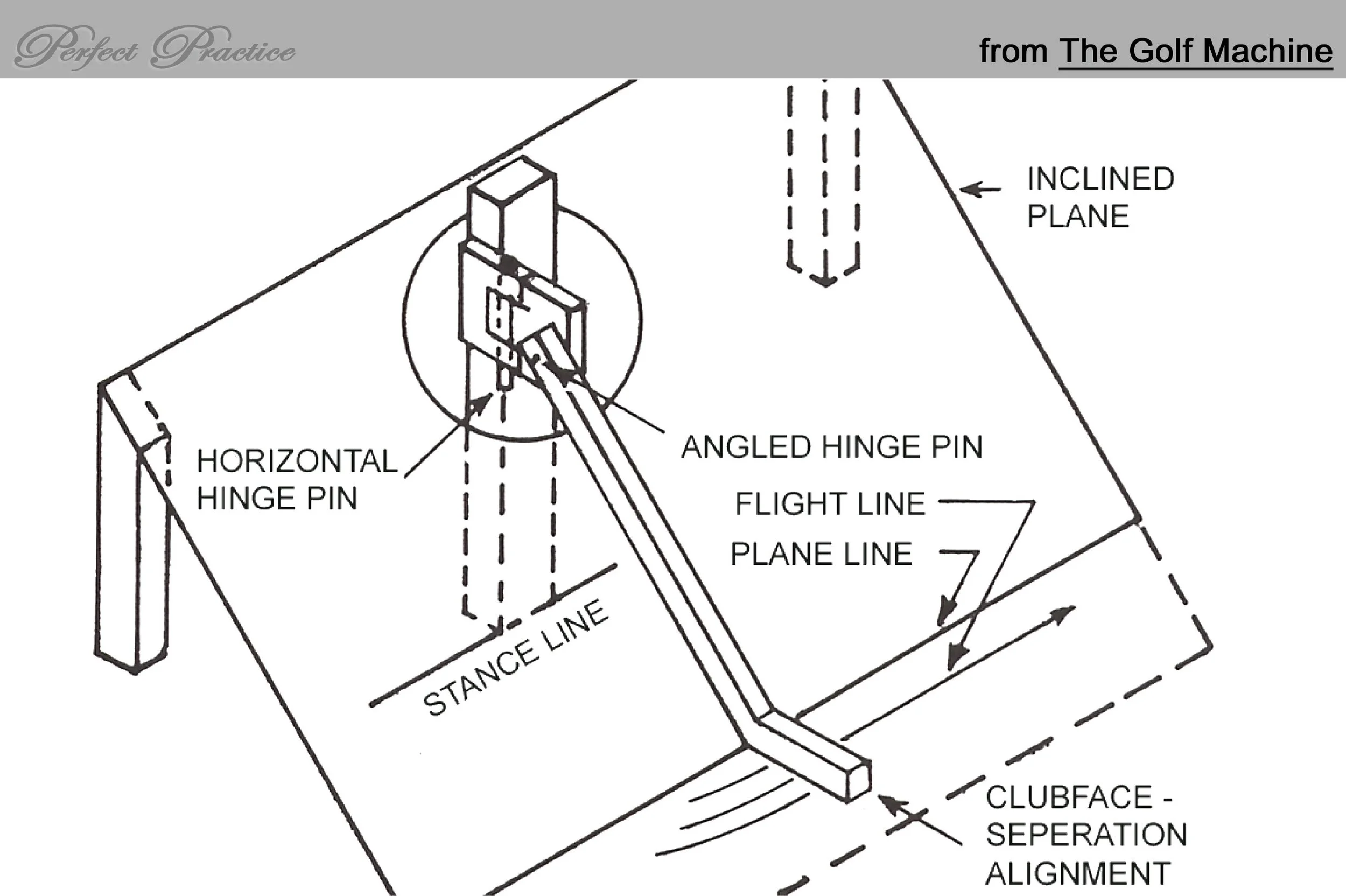
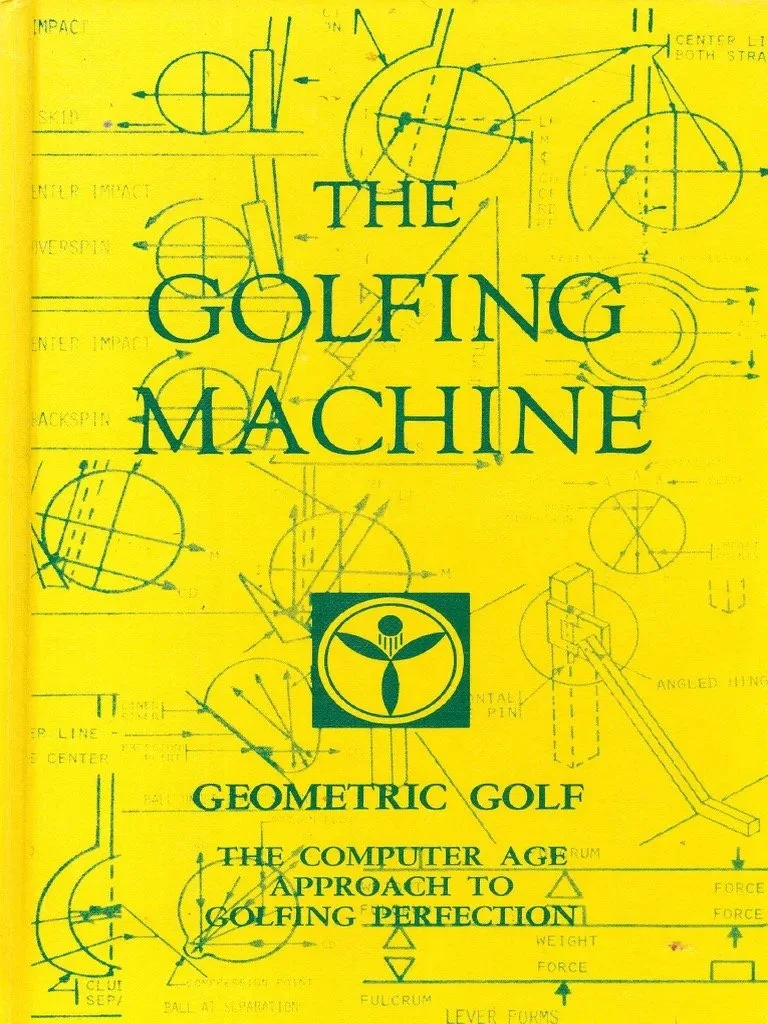
The Golfing Machine
By Homer Kelley
My Story with The Golfing Machine
I got started with my introduction of TGM when I went to Allegany College of Maryland. Our Professional Golf Management Programs Teaching and Coaching components were heavily established based on the principles found through these chapters. As I started teaching and coaching on a full time basis in 2019, I started implementing my very minimal understanding of the concepts at that time.
In 2020, a highly regarded golf instructor, Mike Dickson, started teaching next to me when the driving range of Congressional CC was being remodeled. Mike’s coaching was heavily influenced by TGM and he grew my understanding and passion for learning TGM much further.
Through Mike I was introduced to two of his friends and mentors, David Kuhn and Lynn Blake. Lynn is considered the leading living expert of TGM, as he could recite to you word for word the entire 3rd edition of printing. David Kuhn, who also learned under Lynn Blake, spent time with Ben Doyle, who was one of the first authorized instructors of TGM.
Lynn Blake started his own certification (Lynn Blake Certified) called Alignment Golf. Going over the basic and core principles of TGM. David Kuhn has become the only instructor in North America to teach the Lynn Blake Certified program aside from Lynn himself to this day. After spending time with David and going through the Lynn Blake Certified Instructor program several times, David helped me begin to master my approach and comprehension of the system.
Since then, I’ve taken my own deep dive into the book. Making it the foundation of my mechanical coaching philosophy. There is a time and place for mechanics, and then there is a time and place for focusing on a players mindset, fitness, emotional control, strategy, confidence, etc. To me, the difference is between Practice vs Playing golf. Practice is Mechanically Focused and Playing is Target Conscious. As long as this isn’t backwards, we’re alright.
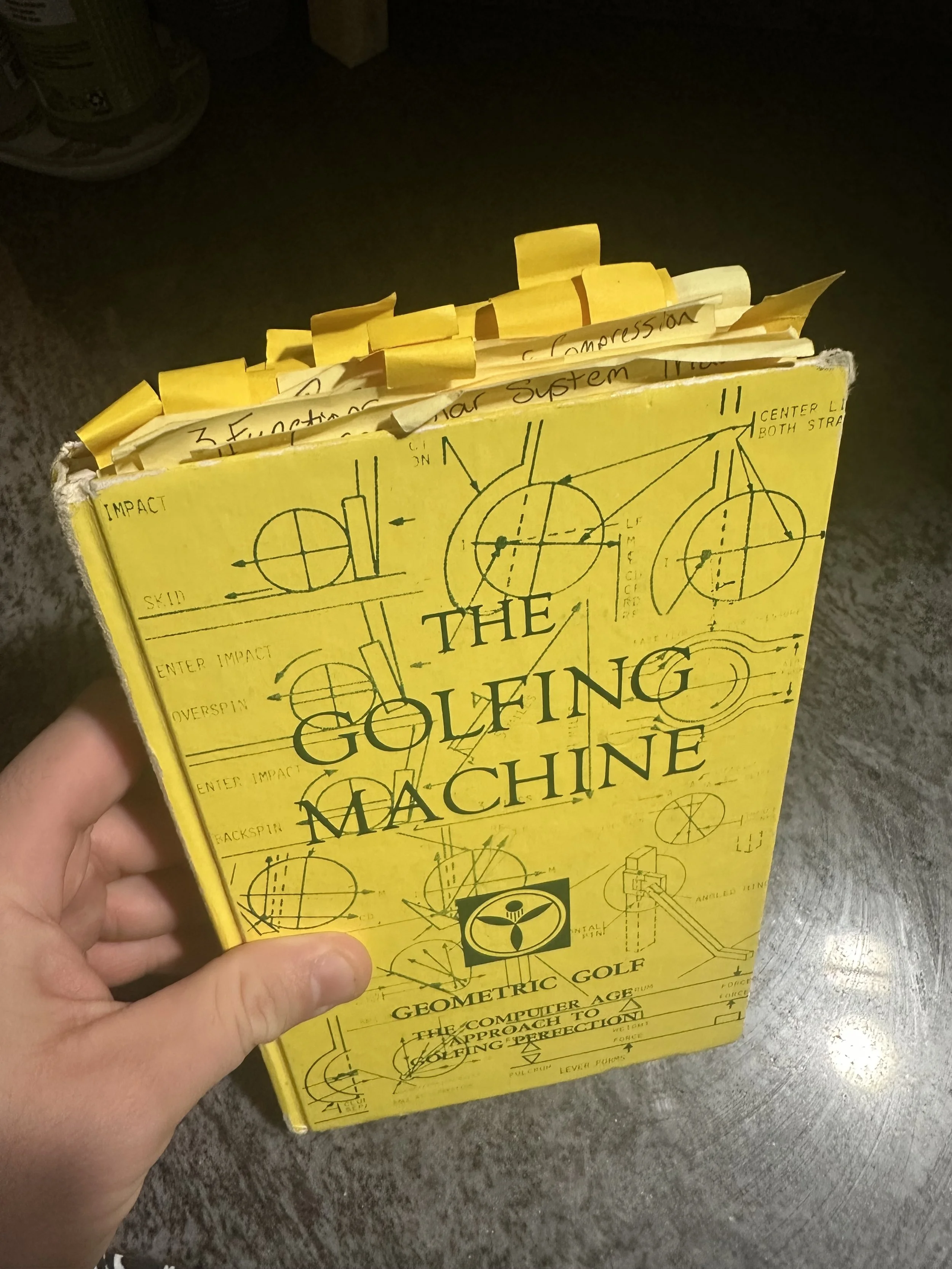
My 6th edition of The Golfing Machine with tedious notes
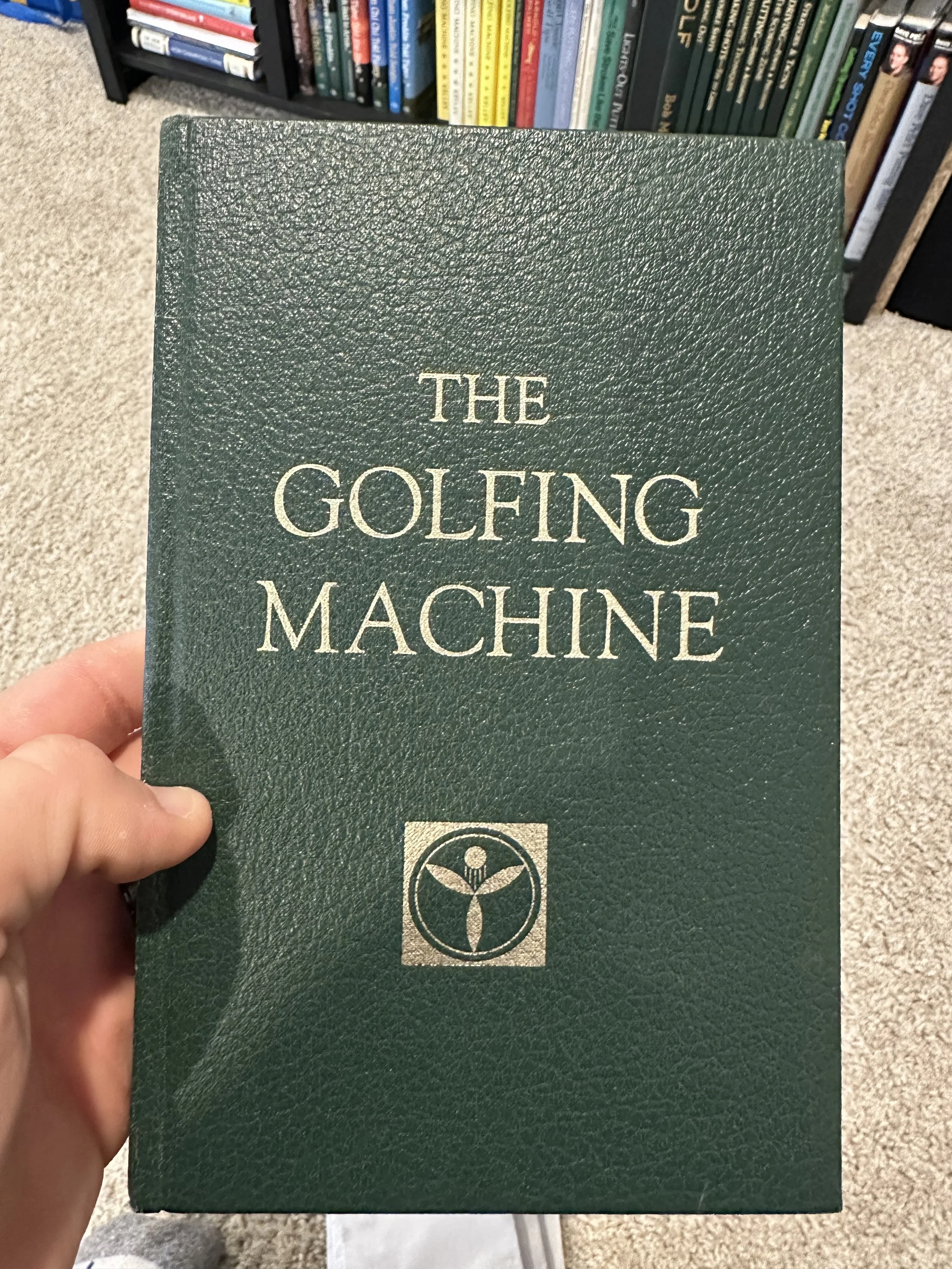
My 2nd edition of The Golfing Machine
The Golfing Machine Explained (Briefly…)
TGM is a System when used properly, not a method. In my opinion, the negative talk that I’ve heard about TGM is when it is used as a one size fits all type of philosophy. However, Homer Kelley directly stated that with this system “there is no THE WAY, there will only become MY WAY…”
The system is simple. The “Star System Triad.” Homer breaks things down into sets of threes. 3 Functions, 3 Stations, and 3 Imperatives. In my lessons, I often times will prioritize this system, focusing on the 3 Functions, at the 3 precise Stations, employing the 3 Imperatives to do so.
3 Functions (parts of the club to control): ClubFACE (ball control), ClubHEAD (divot control), and ClubSHAFT (sweet spot control)
3 Stations (parts of the swing to have them controlled during): the Address, the Top, and the Finish
3 Imperatives (3 Non-Negotiable Fundamentals): “Flat” Lead Wrist (ClubFACE Control), Lag Pressure (ClubHEAD Control), and a Straight Plane Line (ClubSHAFT Control)
All while applying those through 3 Zones of ourselves: 1) our BODY, 2) our ARMS, and 3) our HANDS and emphasizing 3 Essentials that we should aspire to obtain: 1) Stationary Head 2) Balance and 3) Rhythm
Along with the Star System Triad, Homer emphasizes two types of motions, Swinging vs Hitting, and 24 Basic Components to the Golf Stroke. Although each component could take years to master or expertly dissect, they are all simple in their own right.
I teach motion, not positions. I teach alignments, not positions. Alignment golf smothers position golf instruction because alignments are for everyone and timeless. Positions are feel based, alignments are law based.
Swinging vs Hitting:
Swinging is for the more flexible player, who gets their power mainly from the orbiting body rotation.
Hitting is for the stronger player, who gets their power mainly from the driving and active right arm.
Both are effective, both are practical, both are efficient. If you’re both strong AND flexible, you should employ and practice both motions. A golfer doesn’t have to either be a long hitter without accuracy OR a short player with accuracy. A golfer has the ability to be powerful and accurate when these concepts are utilized correctly.
24 Basic Components:
1) Grip - Basics 2) Grip — Variations 3) Stroke - Basics 4) Stroke - Variations 5) Plane Line 6) Plane Angle 7) Plane Angle - Variations 8) Address 9) Fix (Impact) 10) Hinge Action 11) Pressure Point Combinations 12) Pivot 13) Shoulder Turn 14) Hip Turn 15) Hip Action 16) Knee Action 17) Foot Action 18) Wrist Action 19) Lag Loading 20) Trigger Types 21) Power Package Assembly 22) Power Package Loading 23) Power Package Delivery 24) Power Package Release
Lastly, for each one of the 24 Basic Components listed above, there are several possible variations. This is where, when employed properly, TGM is not THE WAY, but MY WAY. There are almost limitless combinations that could take place to create someone’s golf stroke. With that, comes confusion. It’s my job to be the expert navigator of that information.
I stand by this, there are SAMENESSES and then there are DIFFERENCES. The more rudimentary someone’s skillset is, the more the Samenesses matter for them. The more advanced a players skillset is, the more the Differences matter to them.
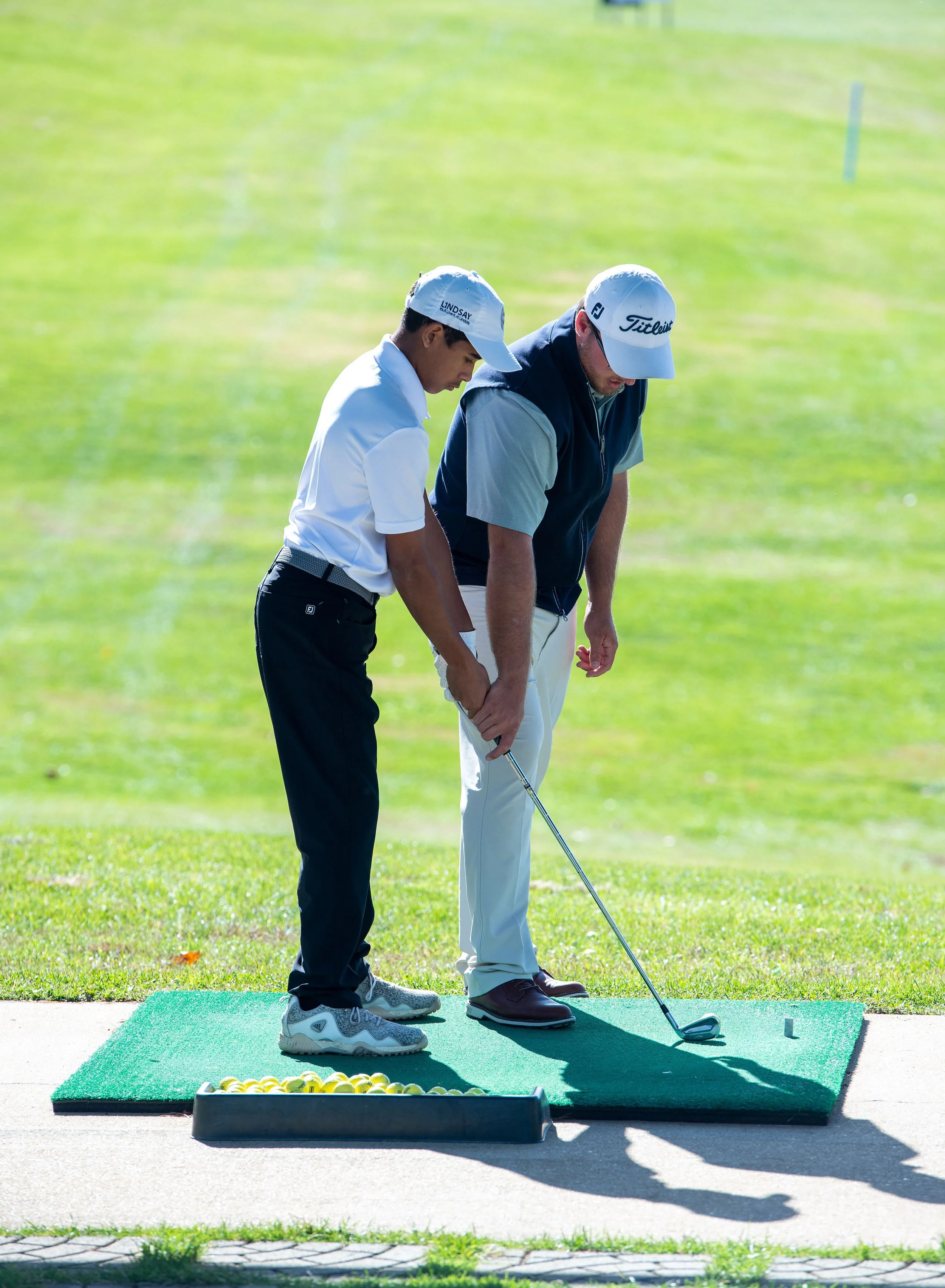

Lynn Blake Certified Instructor
As mentioned earlier, David Kuhn is one of my friends and mentors and I have had the privilege to attend his Alignment Golf seminars and become Lynn Blake Certified. I also have the honor to have attended the last Lynn Blake Certified course that Lynn himself taught at the 2020 PGA Show in Orlando FL.
Attending these sessions several times is the only reason that I have the comprehensive knowledge that I do to this day of TGM. In my opinion, a hands on approach from an expert is the only true way to gain the secret knowledge that falls within this system.
I cannot recommend this program enough, especially to any coaches who are just getting started and need a foundation to stand on for the start of their career.

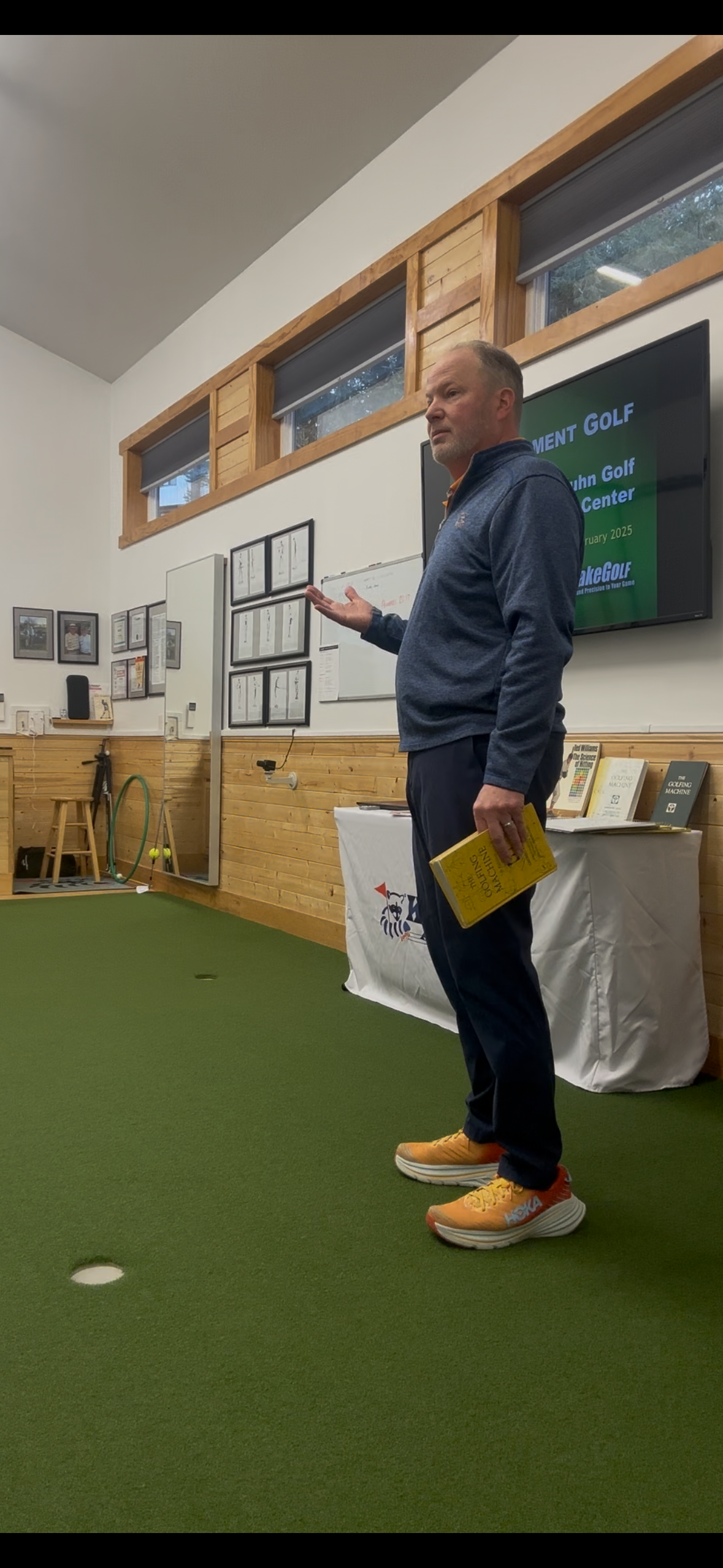
How I use TGM in my Day to Day Teaching
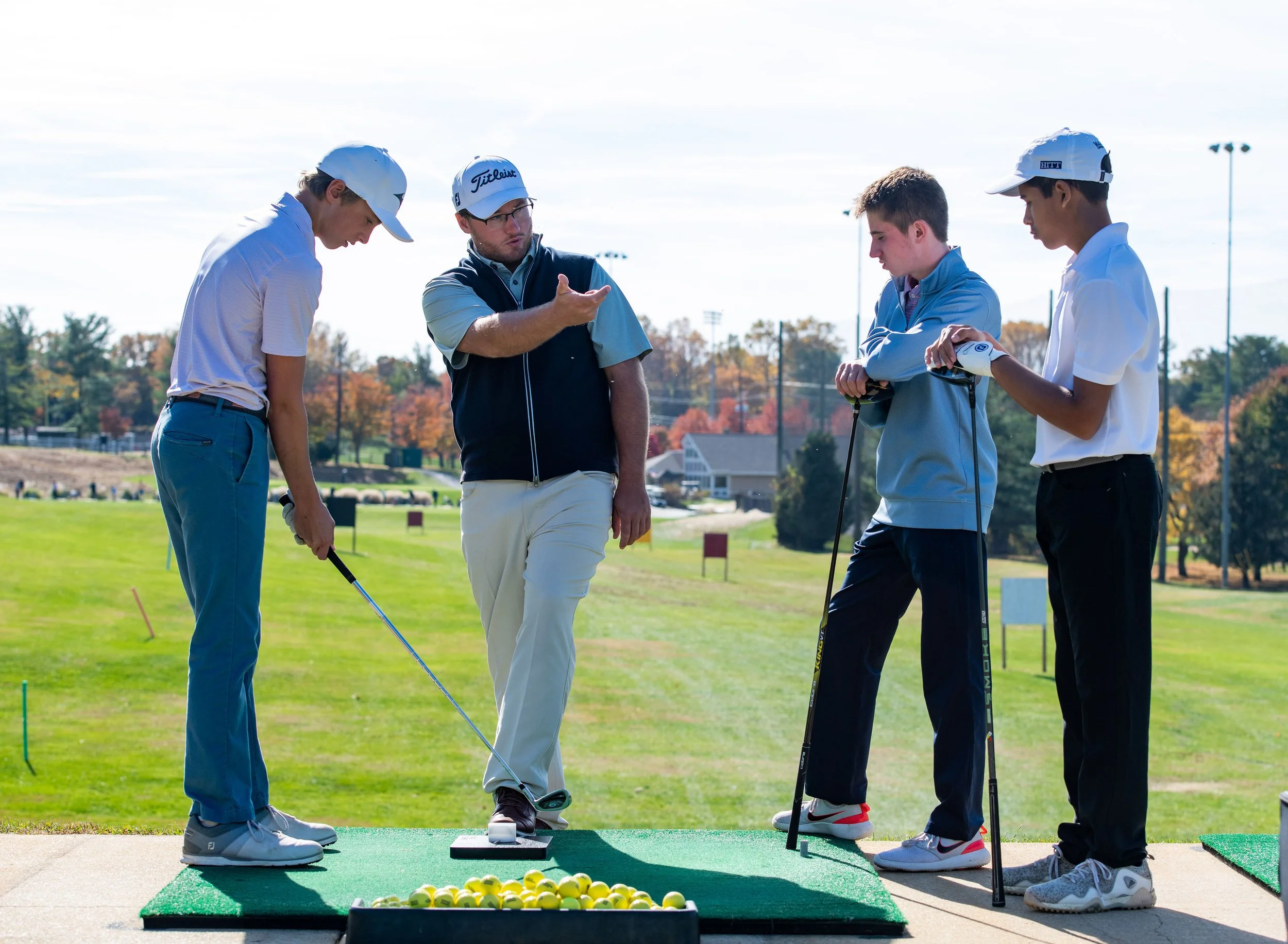
I focus on one key Zone for the player at a time. We also will focus on one key Function at a time.
Sometimes, to accomplish goals quickly, this isn’t possible. But for most, this is the key to success. We approach learning as a step by step process.
“It’s not instant perfection, but continuous progress towards a practical goal.”
- Homer Kelley
Get In Touch
If you're interested in working with me, complete the form with a few details about yourself. I’ll review your message and get back to you as soon as possible.